
South Sea Pearls (Australian): The Queen of Gems
When we imagine a luxury pearl—large, white, and with a satin sheen—we almost always think of the term Australian Pearl. In many countries, this name has become the common way to refer to the most valuable pearls in the world.
However, the technical and correct term is South Sea Pearls (South Sea Pearls). Why? Because these gems are not only cultivated in Australia. They are born in a golden triangle of the Pacific that also includes Indonesia and Philippines.
All of them come from the same mother: the oyster Pinctada Maxima, the largest in the world. Depending on the genetics of this oyster and the waters where it grows, we obtain the two major families of this gem: the White variety and the Golden variety.
The SY Perlas tip: Although the market calls them all "Australian," knowing the difference between the white and golden varieties will help you choose the piece of jewelry that best suits your skin tone and style.

The White Variety (White South Sea)
This is the pearl that most customers identify as "Australian." It is the standard of elegance for high jewelry necklaces.
-
The Origin: Mainly grown on the coast of Australia (especially in the legendary Broome area) and Indonesia. While Australia specializes almost exclusively in white pearls due to its silver-lipped oysters (Silver-lipped), Indonesia is a giant producer that offers both white and golden varieties.
-
The Color: Its distinctive feature is a crisp, regal white.
-
The ones from Australian waters they usually have nuancesovertones) cool, such as silver, steel, or ice blue.
-
The white from Indonesia they can feature both cool nuances and slightly creamy tones, which are very flattering.
-
-
The Style: Cold, regal, and timeless. It is the perfect choice to brighten the face and convey status discreetly.

[Find our jewelry with White South Sea pearls]
2. The Golden Variety (Golden South Sea)
If the white one is the queen, the golden one is the exotic empress. In recent years, demand for it in the international luxury market has soared.
-
The Origin: The Philippine Islands The undisputed leader in the production of high-quality golden pearls ("Deep Gold") is the Philippines. Indonesia also produces golden pearls, sharing cultivation with white pearls.
-
The Color and Its Value: It is vital to understand that its color is 100% natural, it is not a dye or treatment. The golden-lipped oyster (Gold-lipped) creates tones ranging from a soft color Champagne or cream to the coveted Deep Gold (deep gold).
-
Expert's note: Here the rule is clear: the intensity determines the price. In SY Pearls, we carefully select pieces with intense golden saturation (similar to 24k gold) because they are the rarest, most valuable, and most sought-after on the market.
-
-
The Style: Warm, opulent, and bold. Unlike white, which is neutral, the golden pearl makes a statement. It works spectacularly well on tanned or warm-toned skin.

[Find our jewelry with golden South Sea pearls]
What sets them apart from the rest? Their 3 hallmarks
Before talking about its price, we must understand its physical properties. How do we distinguish a South Sea Pearl from an Akoya or a Freshwater pearl? The key lies in three unique characteristics:
1. The Satin Sheen (The "Inner Glow")
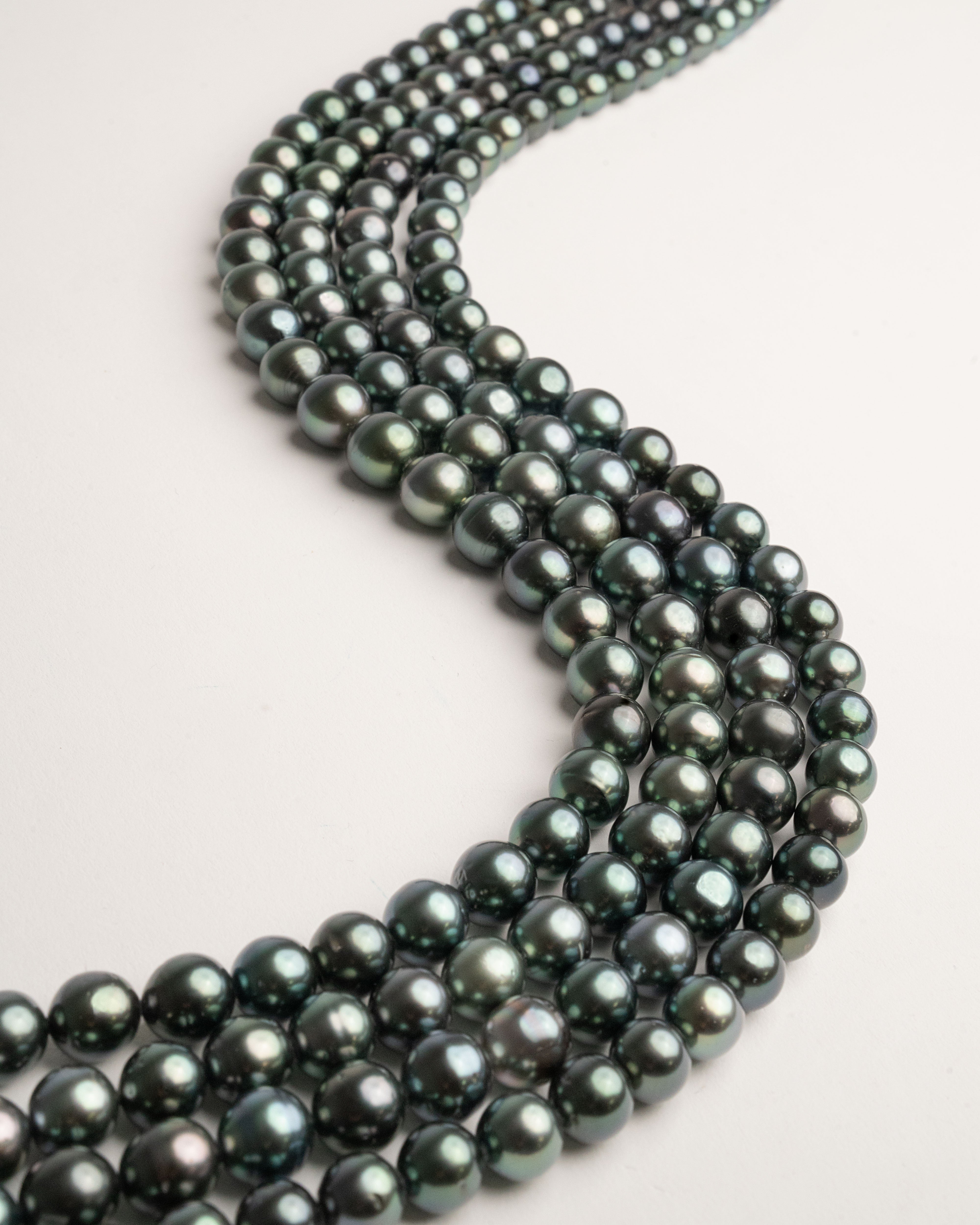
This is its identity signature and the main criterion we use in SyPerlas to select our pieces. Unlike the "mirror-like," metallic luster of Japanese pearls (Akoya), South Sea pearls have a satin sheen. With very thick layers of nacre, light not only reflects off the surface, but seems to emanate from the depth of the gem. It is a soft, velvety, and extremely sophisticated glow.
2. Size XL
While a traditional pearl usually measures between 6 and 8 mm, South Sea pearls are in a league of their own. It is true that recently the Edison pearls (Freshwater) have managed to reach similar sizes, but in the world of saltwater cultured pearls, the South Sea pearl remains the undisputed queen for its quality and origin.
-
The standard: Habitually range between the 9 mm and 15 mm.
-
The rarity: Finding a necklace with high-quality, uniform pearls over 14 mm is a rarity reserved for high-end collections.
3. Organic Shapes
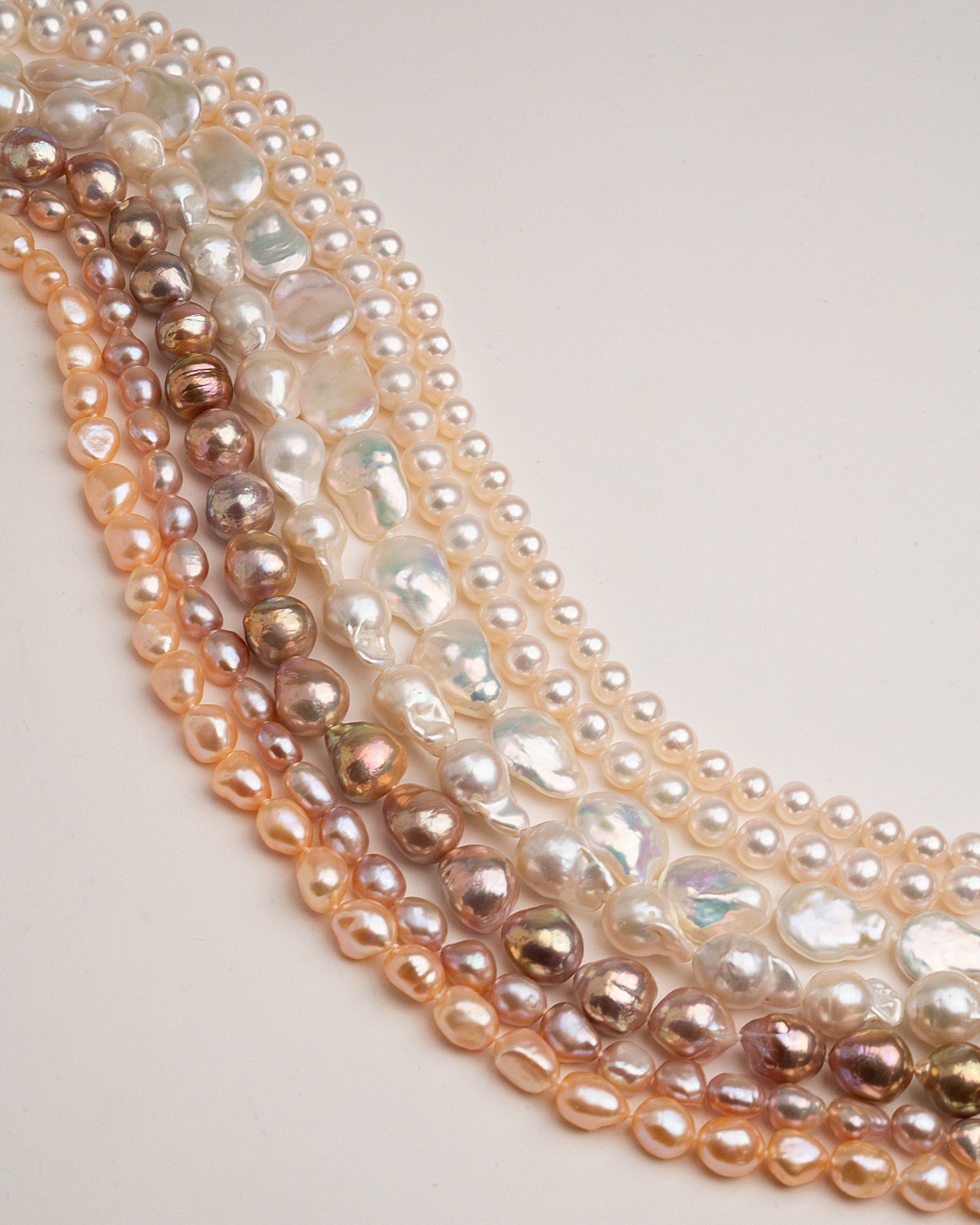
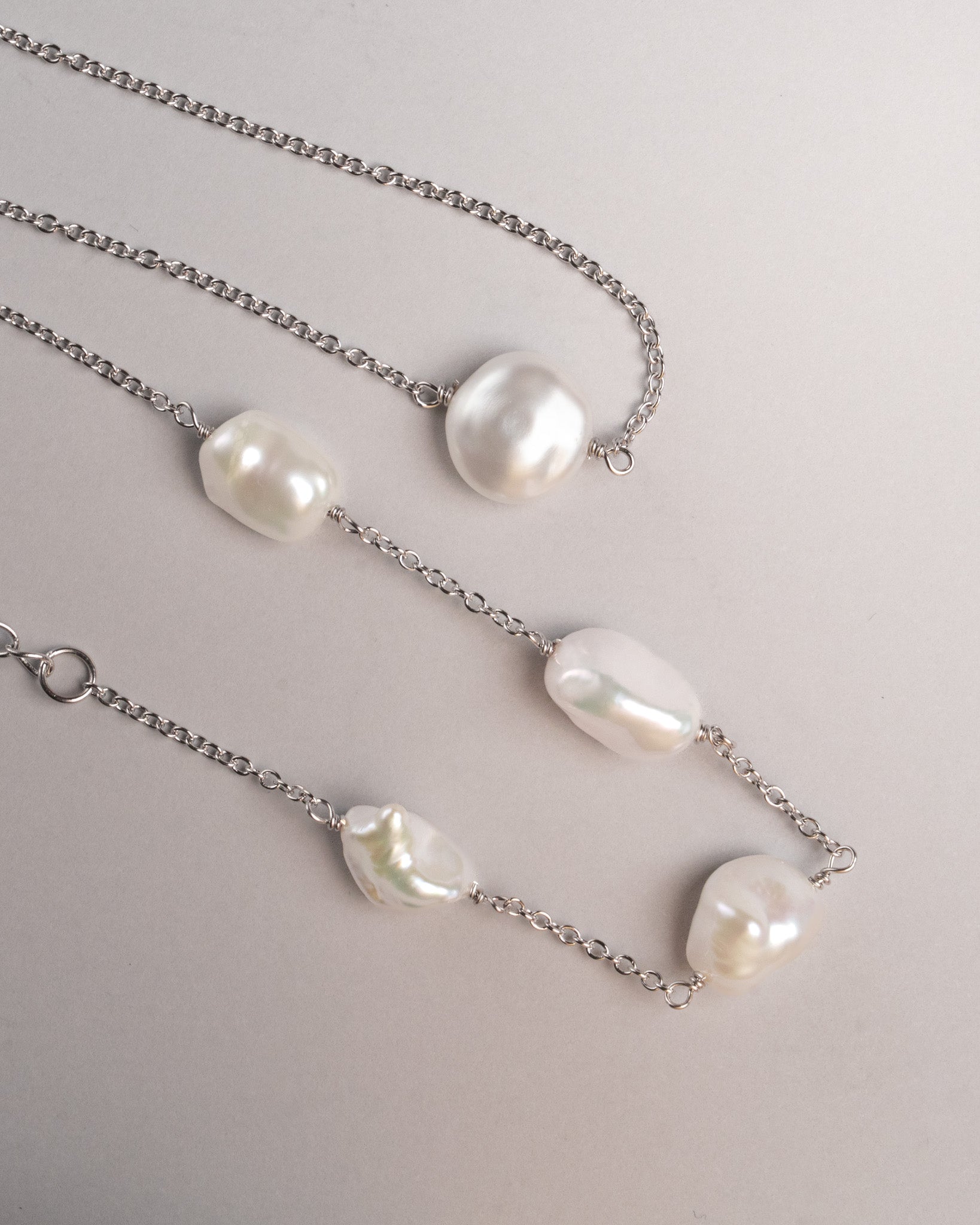
The oyster Pinctada Maxima it is a living, wild organism. Obtaining a perfectly round pearl is very difficult. That is why the shapes baroque, drops and ring-bound are very common. Far from being imperfections, these organic shapes are highly valued in modern European design for their unique character.

Why are they so valuable? The odyssey of their cultivation
En SY Pearls We receive many inquiries about the price of these gemstones. The reality is that their high value is not a market whim, but rather the consequence of a real scarcity and a extreme logistics.
1. An adventure on remote seas
To understand their value, you have to picture where they come from. Australian pearl farms (especially off the coast of Broome) are not accessible factories. They are located in open sea, in pristine and isolated areas to guarantee the extreme purity of the water that the oyster needs.
-
High-cost logistics: For access to these farms, technicians and divers must travel in seaplanes or helicopters until reaching the mother ships.
-
Life in the sea: The crews live on these boats for weeks, cleaning and caring for the oysters by hand, battling the tides and ocean conditions.

Horizontal Falls in Talbot Bay, a well-known Australian pearl farming area near Broome
2. The Time and Risk Factor
While other pearls are harvested in months, the South Sea pearl requires infinite patience. The oyster must remain in the water for between 2 and 4 years to create that thick nacre. During all this time, the grower risks losing everything: typhoons, temperature changes, or predators can wipe out years of work in a single night.
3. Exclusivity
Due to this logistical difficulty and how delicate the oyster is, production is extremely limited. From each harvest, only a tiny percentage is of good quality (round, clean, and with a high luster), which we select in SY Pearls. You are not paying for just a piece of jewelry; you are paying for the rarity of something that has survived years in the wild ocean.

Is there a more affordable alternative? The Edison effect
We know that purchasing a South Sea pearl necklace or a pair of earrings is a significant investment. As we have explained, their price reflects the extreme difficulty of cultivating them in remote oceans.
However, for those customers who wish to the visual impact, the large size, and the luxury of a large pearl, but are looking for a tighter budget, there is a "secret option" that has revolutionized recent jewelry: The Edison Pearls.
The Australian "Look" at a fraction of the price
Edison pearls are Freshwater cultured pearls produced with advanced technology that achieves giant sizes (11-16 mm) and nearly round shapes that were previously impossible outside the sea.
-
Are they the same? No. The Australian pearl is a saltwater gem, rarer, with a unique satin luster and an investment value that holds over time. It is for collectors and lovers of purity.
-
Why choose Edison? Because they offer a unbeatable value for money. At first glance, they achieve the same effect of volume and elegance, with spectacular metallic shine that would challenge even expert jewelers, but at a more reasonable cost. But let’s be nuanced: "lower cost" does not mean "cheap". The high-quality Edison pearls (round and clean) that we work with at SY Perlas are significant gems that, in necklaces, comfortably exceed 4 figures. However, this figure is only a fraction of what their identical South Sea equivalent would cost, which can exceed 6 figures.

En SY Pearlsrealistically, a perfect necklace of 13mm Australian pearls can cost as much as a luxury car. Thanks to our Edison collection, you can enjoy that same striking look at a much more affordable price, without giving up the pleasure of wearing genuine high-quality cultured pearls.
[Discover our Edison Pearl Collection]
Conclusion: Which one should you choose?
The choice is not a matter of quality, but of personality:
-
Choose White South Sea (Australiana) If you're looking for tradition, brightness, and a "wardrobe staple" piece of jewelry that will be passed down from generation to generation.
-
Choose Golden South Sea if you seek distinction, warmth, and to own one of the ocean’s most unique and exotic gems.
En SY Pearls, we are experts in these varieties. We personally select the lots, ensuring that, whether it comes from Broome or Palawan, the pearl meets the highest standards of luster and surface quality.
Discover our exclusive collection:
[View Australian Pearl Collection]