
Natural Pearls vs. cultured pearls
The Great Jewelry Myth: Natural or Cultured Pearl?
There is widespread confusion in the market. We often get customers looking for "Natural Pearls" thinking it is synonymous with "Real Pearls".
As bead experts, we must be clear: What you're looking for are Cultured Pearls.
The Natural Pearls (wild, found by chance on the seabed) are nowadays museum or auction rarities. A high-quality natural pearl necklace can cost more than a mansion.
Therefore, the reality of today’s luxury market is simple:
The 99.9% of real pearls what you’ll see in the best jewelry stores in the world (including ours) is Cultivated.
The rest,(Mallorca Pearls, Shell, crystal...) are imitations industrial ones made of plastic, glass, or crushed shell.
Note: Since 'Mallorca Pearls' are the most famous imitation and the one that causes the most confusion, we have prepared an exclusive article explaining the reality: [Read the truth about Mallorca Pearls]

Natural saltwater pearls showcased at the Hong Kong International Jewellery Fair
The linguistic confusion: "Natural" does not mean "True"
Here lies the most common mistake. Many customers and unfortunately many sellers non-specialists use the term "Natural Pearl" simply to distinguish it from a plastic one.
But in Jewelry, we must be strict with the terms, to protect the customer.
The Natural Pearls (Wild) biological accidents that occur purely by chance on the seabed, without human intervention. The statistics are devastating: historically, it was necessary to open about 10.000 oysters to find a single natural pearl of decent quality.
The key fact you need to know: The astronomical price of natural pearls is due to their extreme shortage, not necessarily to its beauty. In fact, a high-quality cultured pearl (selected for its perfection) usually has better luster and shape than most wild pearls.
What exactly is a Cultured Pearl?
A cultured pearl is a real pearl, with the only difference being that the process has been initiated by the human hand.
Insteаd of waiting for chance to introduce a foreign body into the oyster, our expert pearl farmers carefully insert a nucleus to stimulate the mollusk. From that moment on, the outdoors take control. The oyster covers this core with thousands of layers of nacre over the years, exactly as it would in the wild.
In summary:
-
Imitation Pearl: Factory, paint, plastic/glass. (Artificial).
-
Cultured Pearl: Oyster and mussels, sea or lake, time and mother-of-pearl. (Real Organic Gem).

Tahitian cultured pearl farm in French Polynesia
Finally, so you understand what you are seeing. In many general jewelry stores, you will see Freshwater pearls labeled as "Cultured Pearls" and the others by name (Akoya, Australian...), as if they were different categories. This is a technical error.
The reality is simple: All are Cultured Pearls.
[Explore our necklaces, Earrings, bracelets, pendants and rings of cultured pearls]
Both an 80€ Freshwater pearl and a 5.000€ Australian pearl are cultured pearls. The real difference is not in the method (man intervenes in both), but in the mollusk, the origin, the scarcity, and the difficulty of cultivation.
Because of that, the right question is not Is it cultivated? (yes, it is), but rather "What type of cultured pearl suits my style?".
Guide to the 4 Main Types of Cultured Pearls
Freshwater cultured pearls
If you see pearls labeled simply as "cultured" without specifying origin, they are usually freshwater. But be careful: in this group there are two worlds.
On the one hand, there are the low qualities (dull pearls, marked by rings) that flood the market.
On the other hand, there are the pearls of high-quality freshwater, representing a 5% of the entire harvest and which are the ones we offer at SY Perlas.
-
The Technical Advantage: Unlike the others, these pearls are almost 100% mother-of-pearl (they have no core), which makes them incredibly resistant to the passage of time.
-
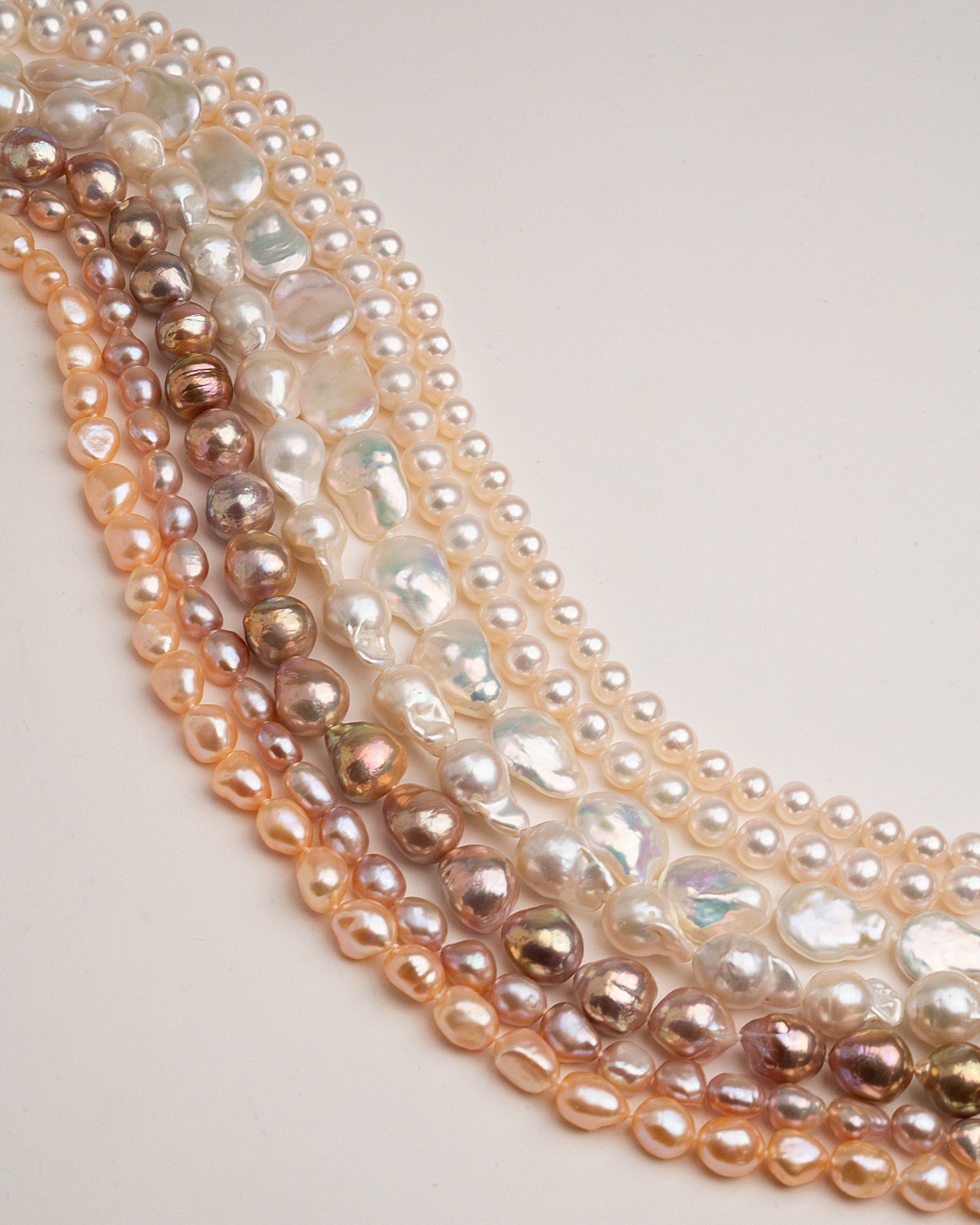
The Style: They are the only ones that, in addition to white, offer natural pastel colors (lavender, peach, pink) and fascinating baroque shapes.
-
Our Opinion: Today, a high-quality round freshwater pearl rivals saltwater pearls in beauty, but at a lower price due to its greater ease of cultivation.
[View Superior Freshwater Collection] Do you want to dive deeper? Read our complete guide on [Freshwater pearls here].

Freshwater cultured pearls can naturally be pink, orange, and purple as well as white, without any type of treatment.
Japanese cultured Akoya pearls: The Mirror Luster
When you close your eyes and imagine "the classic pearl necklace," you're picturing Akoya. They are the icon of elegance, perfect for brides and classic fine jewelry.
-
Your signature: They stand out for two factors: an almost perfect geometric roundness and a mirror shine very intense and sharp (you can see your reflection in them).
-
The SY Pearl Selection: Historically, they are cultivated in Japan and, more recently, in China. At SY Perlas, we prioritize the Japanese quality, guaranteeing that unmistakable "metallic" shine that imitations can never copy.
[View Akoya Pearl Jewelry] Discover all the secrets of the [Japanese Akoya Pearls here].

Strands of Japanese cultured Akoya pearls with great luster.
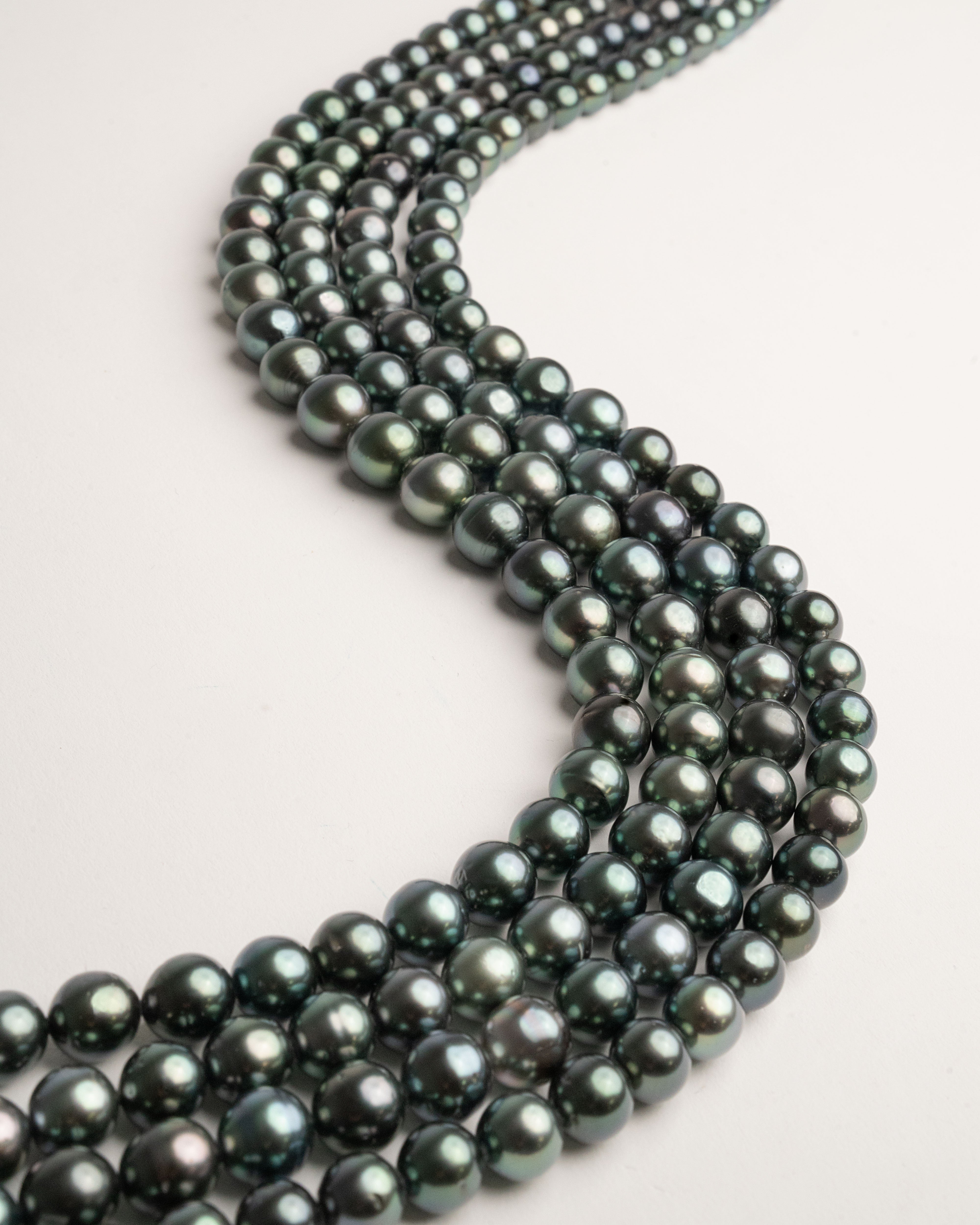
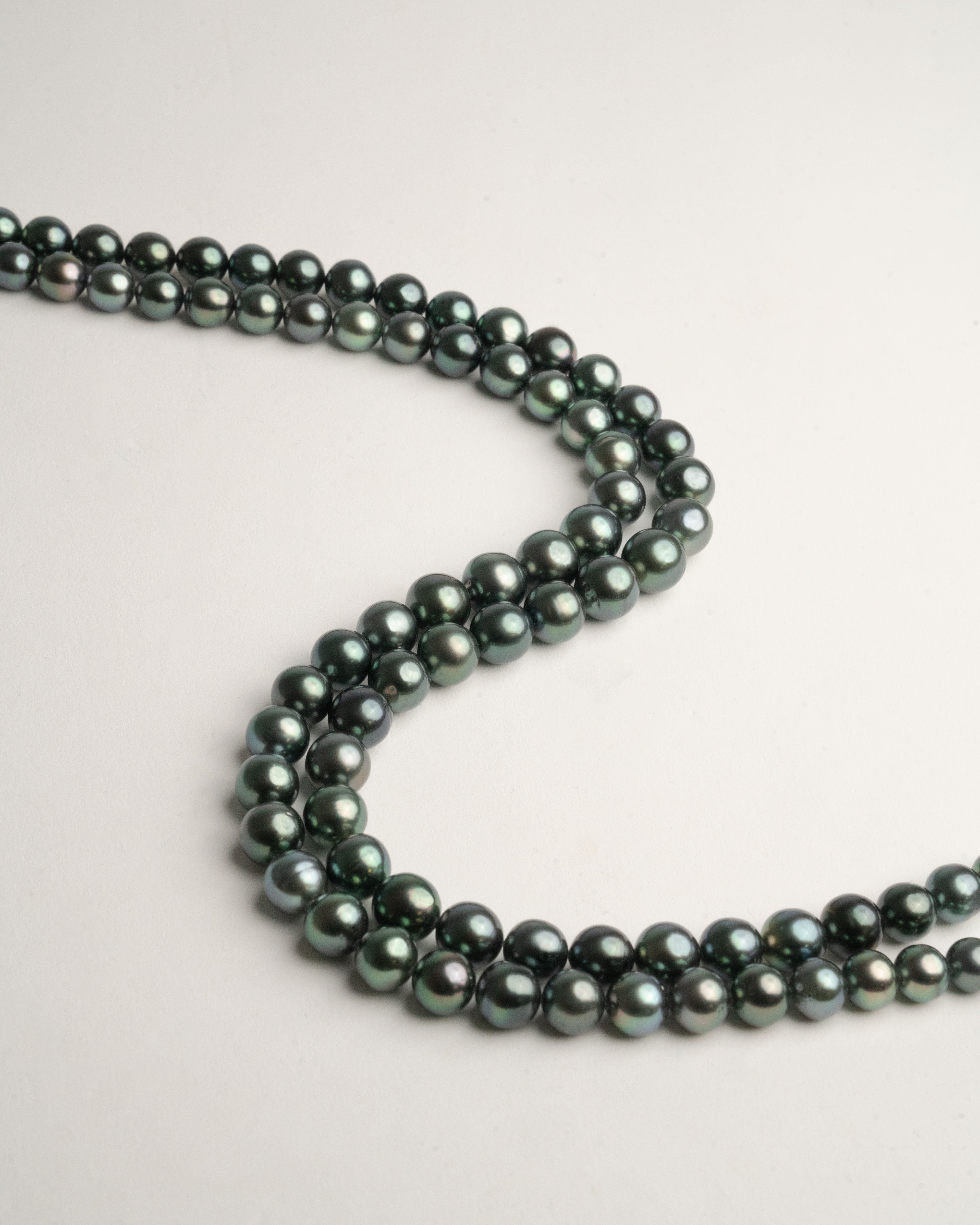
Black Tahitian Pearls: Exotic Luxury
They are the only naturally dark pearls. And note: "Black" is just a figure of speech.
-
The Actual Color: Their tones are a natural spectacle ranging from silver gray to peacock green, cobalt blue, aubergine, or cherry. They are not dyed; the oyster Pinctada Margaritifera gives us these colors.
-
The Origin: They are cultivated in the atolls of French Polynesia. They are large pearls with a lot of character.
-
Opportunity: For 20 years they were unattainable. Today, thanks to increased sustainable production, you can own an exotic, highly valuable piece of jewelry for less than you imagine.
[Discover Tahitian Pearls] Learn more about the exotic ones [Tahitian Pearls here].

Tahitian pearls in one of the oysters that create them, the Pinctada Margaritifera.
Australian Pearls (South Sea): The Queen of Gems
Enter the flagship category. They are the largest, rarest, and most valuable of all cultured pearls.
-
Your signature: Unlike the Akoya's "mirror-like" luster, the Australian has a satin sheen, deep and soft, denoting class and instant sophistication.
-
Varieties: Silver-white (Australia) or intense golden (Philippines/Indonesia).
-
Investment: If you're looking for the most exclusive option, with no compromises, this is your choice. These are heirloom jewels meant to be passed down from generation to generation.
[View Fine Jewelry with Australian Pearls] Meet the queen of gemstones in depth in our article on [Australian Pearls]

Exclusive 17 to 20 mm Australian pearl necklace showcased at the Hong Kong International Jewellery Fair; pearls over 15 mm are truly rare.
Our final conclusion
We hope we’ve dispelled the myth: "Cultivated" isn't the cheap option, it's the real option.
Unless you’re a collector of million-dollar antiques, cultured pearls are what you’re looking for. The key isn’t whether they’re natural or not, but rather Who has selected that cultured pearl for you.
En SY Pearls, we guarantee that every piece, whether Freshwater or Australian, has passed a strict quality filter so that it looks like what it is: an organic and timeless jewel.
Do you have any questions about which type to choose? Write to us and we'll help you find the perfect one for you.