
Freshwater Pearls: What They Are, Their True Value, and Why They Are the Essential Jewel
What exactly are Freshwater Pearls?
Start with the basics. Popularly known as River Pearls or lake pearls, these gems are cultivated inside mussels in freshwater environments, unlike saltwater pearls that grow in oysters in the sea.
A fun fact: No need to think of restaurant mussels. We're talking about mollusks (such as the Triangular Mussel) that can exceed 20 cm in size.
But here is the technical key you need to understand to assess its price: the production capacity is very different.
-
While a marine oyster produces only one pearl at a time...
-
A freshwater mussel can create up to 30 pearls simultaneously.
This natural abundance is a double-edged sword: it makes them more accessible, yes, but it also floods the market with low-quality pearls. And this is where you need to be careful.

Image of a triangular mussel or Hyriopsis cumingi
The reality of the market: Not all are the same
If you search for "freshwater cultured pearls" both online and in jewelry stores, you will find prices ranging from €20, to thousands. Why?
Because in the world of Freshwater there are two realities:
-
Commercial Quality (90% of the market): These are dull pearls (they look like chalk), and they are full of rings and other imperfections that run across their surface. They are the ones commonly used in costume jewelry.
-
High Quality (The SY Pearls Selection): Thanks to modern technology, freshwater pearls of different shapes and colors with spectacular luster are now produced, even round, virtually spherical ones. They are rare, but they are the only ones truly worth it.

The SY Pearl Standard: Only the Top 5%
En SY Pearls, our philosophy is simple: we filter out the vast majority of the mass harvest to keep only the very best. Our expert selects each pearl one by one.
-
Our Quality (Top 5%): Even our most affordable options guarantee intense luster (the most important quality) and a clean surface. We discard any pearl that does not have "life."
-
Our Signature Quality (0,1%): For those seeking excellence. Pearls so round and with such a metallic luster that they visually rival the finest saltwater pearls, while maintaining a lower price.
[Discover our selection of jewelry with Freshwater pearls]

The Great Advantage: Solid Mother-of-Pearl and Resistance E![]() xtrema
xtrema
If you're going to buy your first pearl jewelry, this is the most important technical detail you need to know.
The vast majority of the freshwater pearls you will see (especially up to 9-10mm) have a unique characteristic: they don't have a nucleusThey are 100% pure mother-of-pearl from beginning to end. (All saltwater cultured pearls include a natural nucleus that the oyster coats with nacre)
- Why does this matter to you? Because it makes them incredibly resistant. As they are solid gemstones, they have no thin layers that can chip or wear away with daily use, sweat, or perfume. They are jewelry for a lifetime.
What about giant pearls? To achieve enormous sizes and perfectly round shapes (like our Edison pearls or the new smaller high-end varieties), an innovative technique that does include a nucleus has begun to be used. But here is the key difference: While a standard Akoya pearl has a very thin nacre layer (0,4mm), these new Freshwater pearls have a nacre layer thick and deep, maintaining the legendary durability that characterizes them.

[Explore Freshwater cultured pearl earrings]
A Fan of Colors: Natural and Treated
One of the wonders of freshwater pearls is their color palette, but it is vital to distinguish what is the work of nature and what is the work of man.
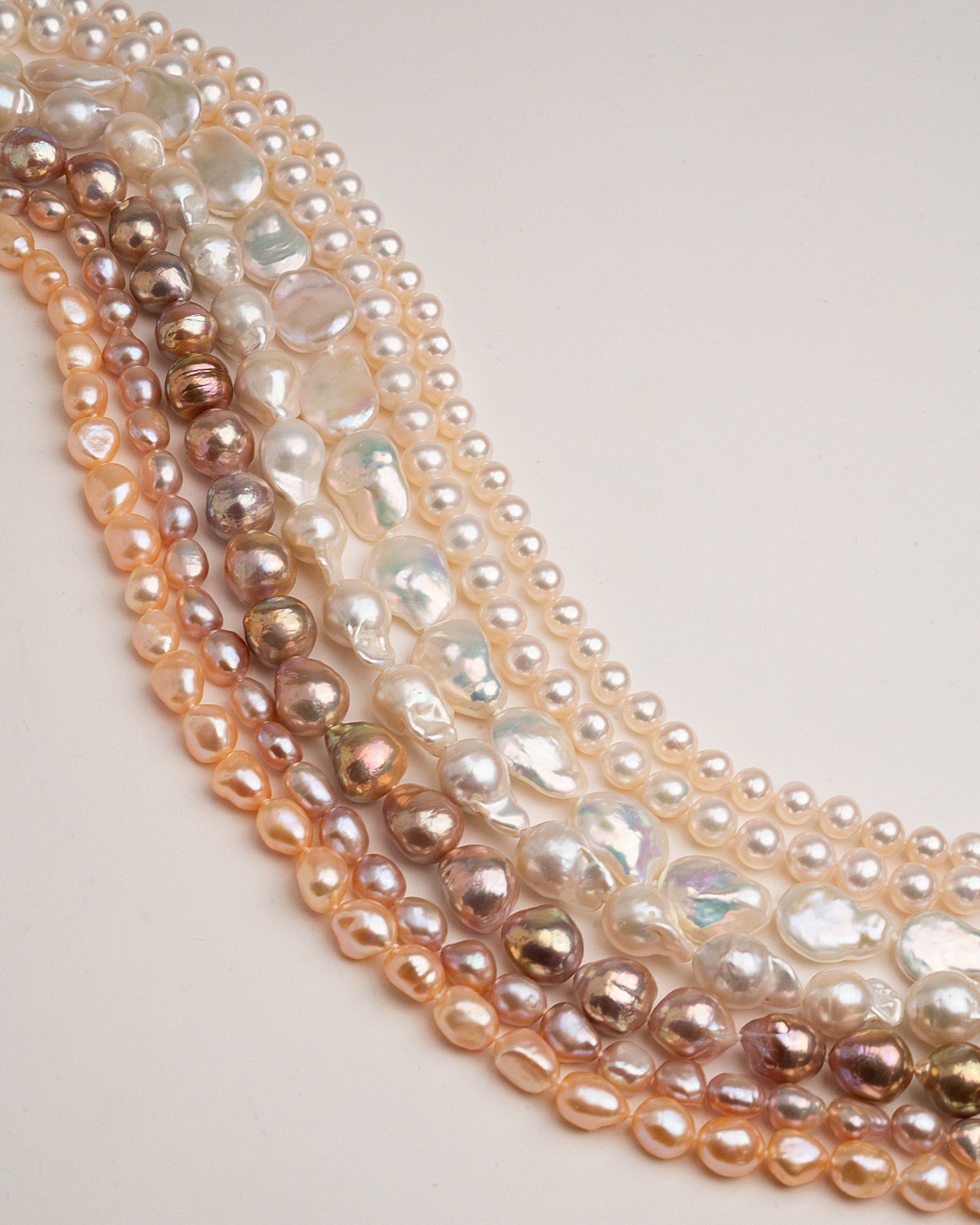
1. Natural Colors (No intervention) Freshwater mussels are the only ones capable of naturally producing beautiful Pastel shades.
-
Classic Range: Besides white, you will find shades Pink, Peach, Lavender and Apricot.
-
Edison Range: In giant nucleated pearls (Edison), nature surprises us with incredible metallic tones such as Bronze, Purple, and even pearls that display several colors at once.
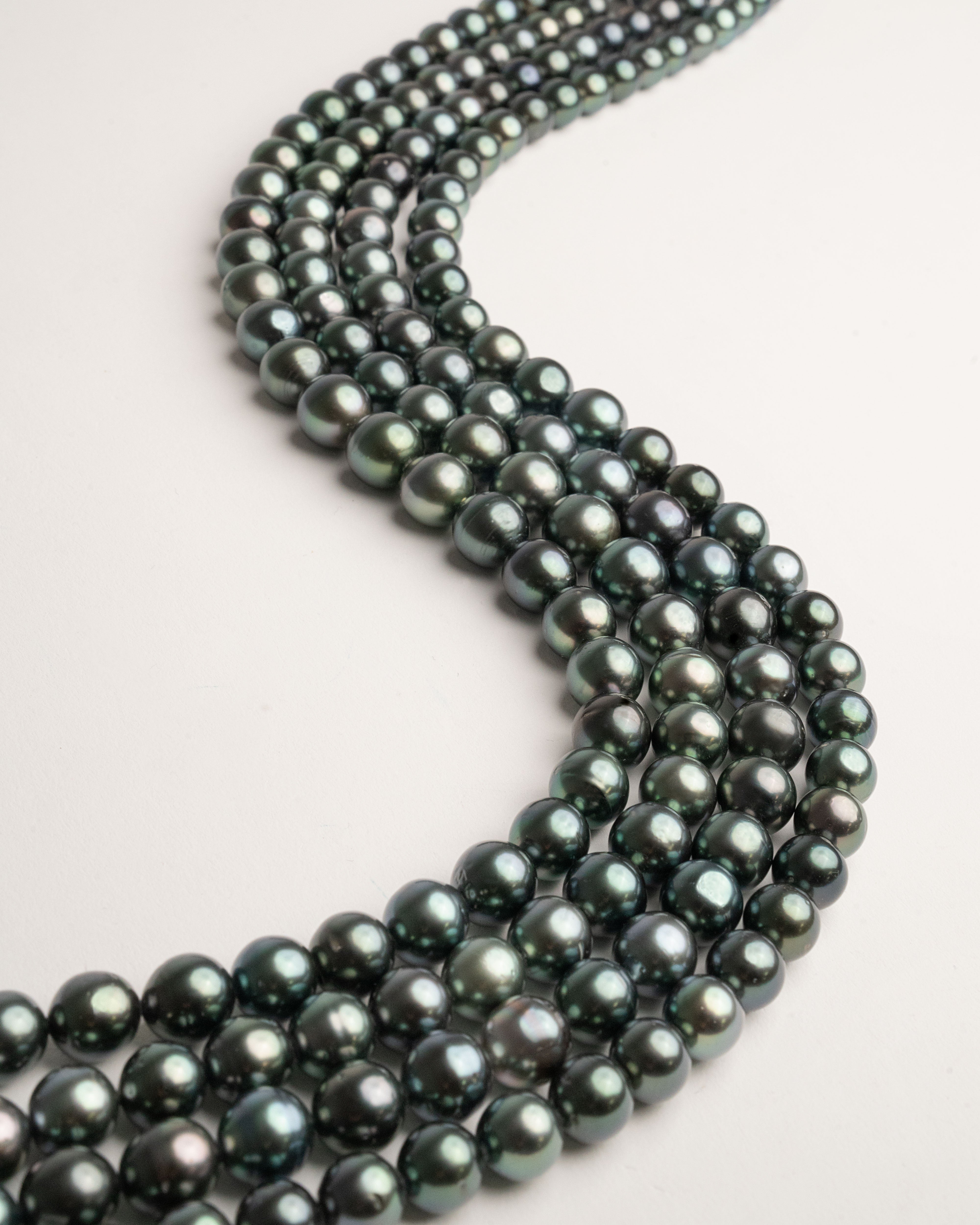
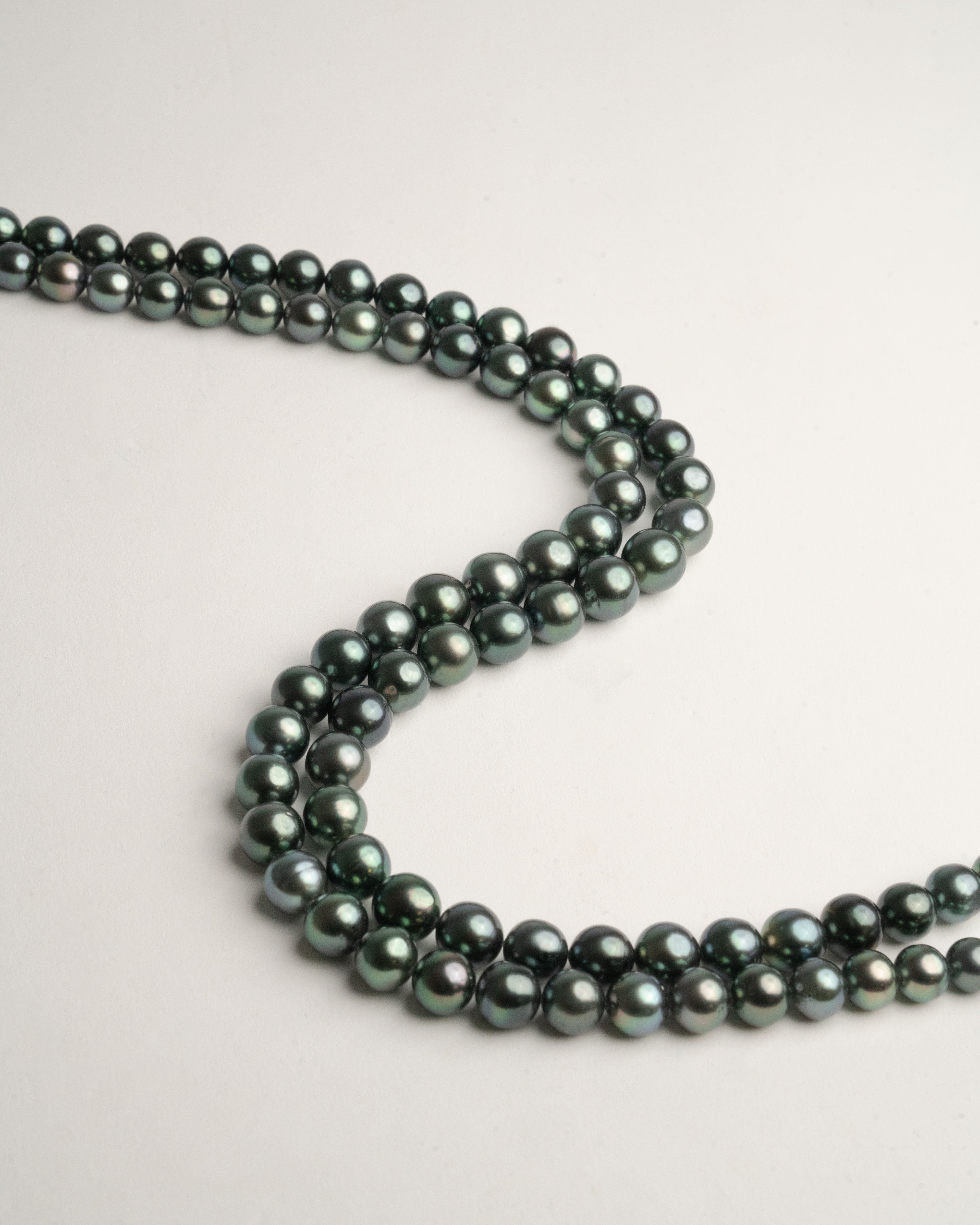
2. What the man modifies (Gray, Silver, and Black) Here we must be very clear: The freshwater mussel does NOT naturally produce black or gray pearls.
Those dark and exotic tones are the exclusive territory of the Tahitian Pearls (French Polynesia).
If you see freshwater pearls in an intense black or steel gray color, it means they have undergone enhancement treatments (dyeing or irradiation). They are a valid option if you are looking for a fashion accessory with a specific color, but in SY Pearls always recommend going for authenticity:
-
If you're looking for deep dark shades, the right investment is the Tahitian Pearls.
-
If you choose Freshwater, enjoy its wonderful range of natural pastels.
[View jewelry with pearls in different colors]

Strand of top-quality lavender-purple freshwater cultured pearls
Shapes: A universe beyond the round
While with saltwater pearls the obsession is the perfect sphere, freshwater cultivation offers us a fascinating variety of shapes. Knowing them will help you choose the perfect jewel according to your style and budget.
1. Round They are the "Holy Grail" of freshwater. Achieving a perfectly spherical pearl in a mussel is extremely difficult and uncommon (less than 2% of the harvest).
-
For whom are they: For those seeking the classic look of an Akoya pearl, but with the durability of solid nacre and a not-so-high price.
2. Semi-round (Near Round) They are pearls that, although not 100% geometrically spherical, appear so to the naked eye. They may be slightly oval or flattened in an imperceptible way.
-
The secret of value: They are the preferred choice for making necklacesOnce on the neck, the human eye perceives the necklace as round, but because they are not "book spheres," their price is much more affordable than that of perfect round ones.
3. Button (Button) They are the most abundant and popular pearls on the market. They have a rounded, domed face and a flat back (like a button or half an orange).
-
Why they’re a hit: They are the global standard for the earrings at an affordable price. Since the flat side rests against the earlobe, from the front they look like a perfect round pearl, but at a much lower cost. It’s the smart way to wear pearls every day. At SY perlas, we only select the highest-quality button pearls for our designs.
4. Drop and Oval (Drop & Oval) Elongated, symmetrical, and very elegant shapes reminiscent of a teardrop.
-
The perfect use: They are ideal for pendants and long earrings, as they visually elongate the neck and add a classic sophistication distinct from the round pearl.
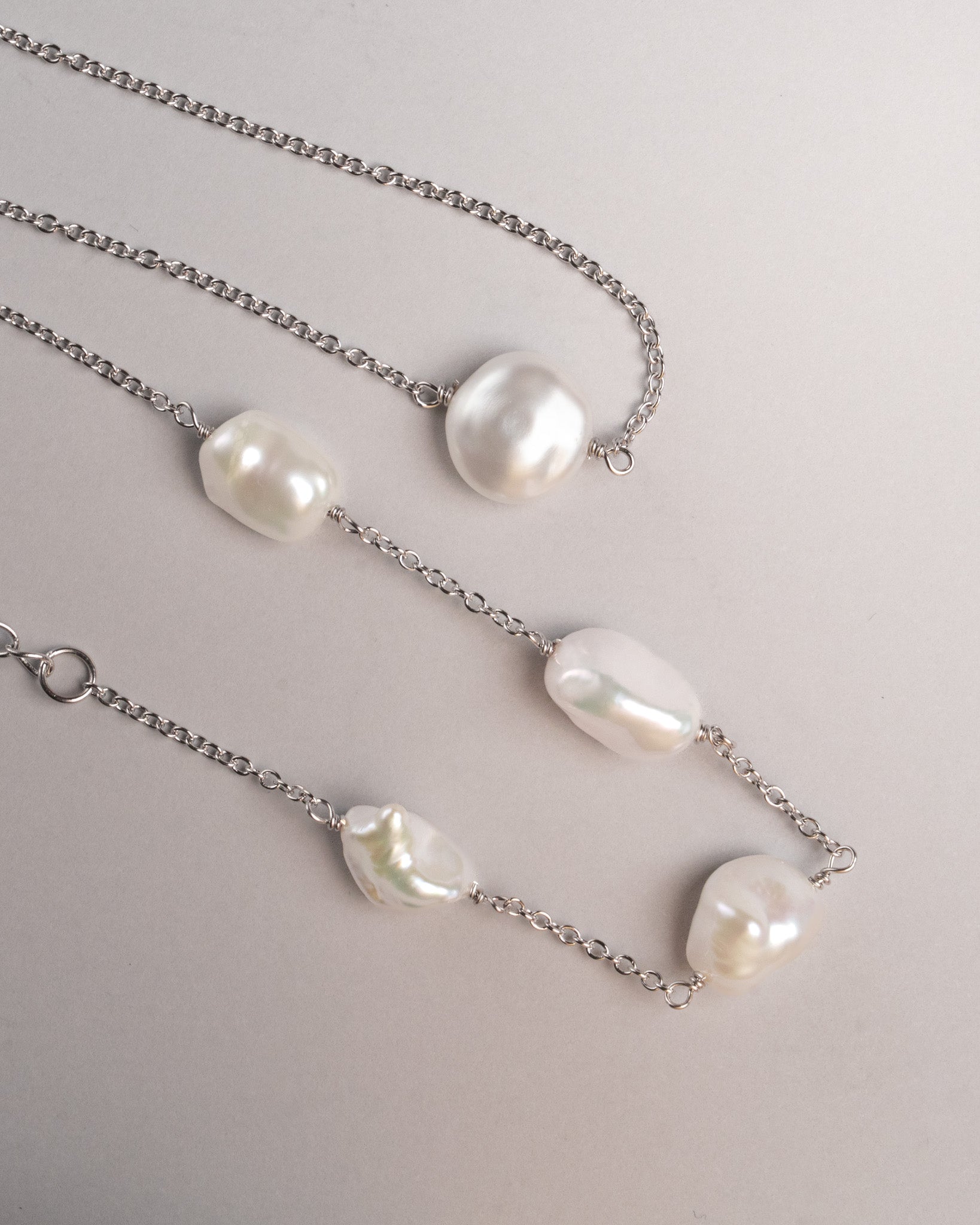
5. Baroque and Keshi The purest form of nature. They are pearls with organic, irregular, and asymmetrical shapes.
- Why they're trending: Far from being a defect, they are now valued for their uniqueness. Each pearl is a unique little sculpture, perfect for modern looks

Creshwater pearl necklaces in different colors and shapes
[Explore Freshwater cultured pearl necklaces]
A special mention: Edison Pearls
Within the freshwater universe, there is a variety that deserves a chapter of its own for having changed all the rules of the game: the Edison Pearls.
They are the latest great innovation in aquaculture. Unlike traditional freshwater pearls, Edison pearls are cultivated with a rigid nucleus to achieve giant sizes (from 11mm to 16mm) and perfect roundness that directly rivals the valuable Australian pearls.
Moreover, they are famous for their unique colors with intense metallic iridescence in bronze, gold, pink, and the coveted purple.
If you love large, spectacular pearls, you have to get to know them inside out.
[Read our full article: Everything You Need to Know About Edison Pearls]

Alma Necklace of Edison baroque lavender-ochre Freshwater cultured pearls
Conclusion and Expert Advice: Is the pearl right for you?
In short, freshwater pearls have stopped being the "affordable option" and have become the versatile and durable piece of jewelry par excellence. They are the perfect choice if you are looking for quality, durability, and beauty for everyday wear without having to make an investment of thousands of euros.
Our golden tip: As gemologists, we always recommend investing in freshwater pearls of High Quality (Top 5% or Signature) rather than buying low-quality saltwater pearls (Akoya or Australian) just to "have the name." An excellent Freshwater pearl will always look better than a mediocre, dull, lifeless saltwater pearl.
When should you choose another type of pearl?
Although freshwater pearls are magnificent, there are specific reasons why our clients decide to move up to the most exclusive saltwater varieties:
-
Looking for the "Mirror Effect" (Akoya Pearls): If your absolute priority is a crisp, reflective mirror-like shine and perfect geometric roundness, then your gemstone is the classic Japanese pearl. [View Akoya Pearl Collection]
-
Looking for Luxury and Size (Australian Pearls): If you're looking for the queen of gemstones, with large sizes (from 10mm) and that unmistakable deep, satiny luster in silver-white or gold, you should choose South Sea pearls. [View Australian Pearl Collection]
-
Looking for True Dark Shades (Tahitian Pearls): If you love peacock, steel gray, or black tones with green undertones, black pearls from Polynesia are the only naturally dark option. [View Tahiti Pearl Collection]
En SY Pearls, whichever origin you choose, we guarantee a selection that will stay with you for life.
Discover the magic of our selection:
[Explore the Complete Freshwater Collection]