How Much Do Cultured Pearls Cost? The Real Price Guide
If you're new to the world of pearls, you're probably pretty confused.
On one website you see earrings for 30€ and on another for 500€. Are they the same? No, not at all.
The type of pearl, its origin, and above all its quality (luster and surface) are what make the dramatic difference in price.
En SY Pearls`, as third-generation experts, we're going to be transparent with you. We're not going to give you meaningless numbers that change tomorrow; we're going to show you the ` Value Hierarchy.
We created this table so you can see at a glance what level of investment and exclusivity each type of pearl represents, always assuming a High-Quality Selection (like the one we work with):
| Pearl Type | Investment Level | Why this price? |
| Freshwater |
💎 (Access to Luxury) |
It is the smart choice. You get a solid-nacre pearl, very durable and of excellent quality, at an affordable price, thanks to its cultivation being more productive than that of oysters. |
| Japanese Akoya |
💎💎💎 (Classic Superior) |
The price goes up significantly. You pay for the difficulty of cultivating it in Japan and, above all, for its unmatched mirror shine and its perfectly round shape. It is the classic pearl for brides. |
| Tahiti (Black) |
💎💎💎💎 (Exclusivity) |
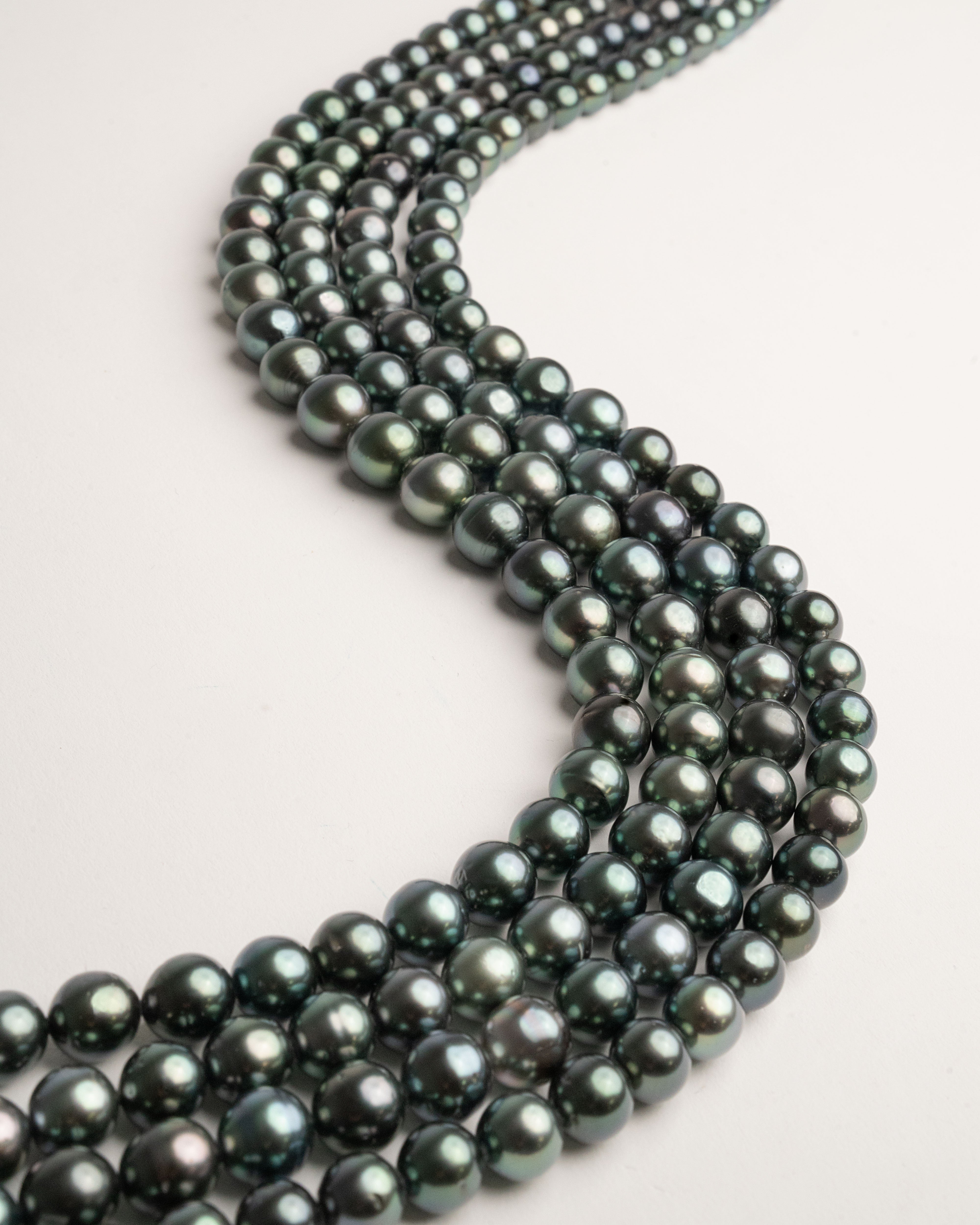
We’re moving into the high end. Their value lies in their naturally exotic tones (they’re the only ones that are naturally dark) and in the fact that they reach larger sizes than the previous ones. |
| Australians |
💎💎💎💎💎 (The Queen) |
The pinnacle of pearls. They are the largest, the rarest, and the ones that require the most years of cultivation in remote waters. Their price reflects their status as one of the most valuable gems in the world. |
Discover hundreds of designs with the finest cultured pearls HERE
The first major distinction: Natural vs. Cultured
It's vital to clear up a common confusion: what you see today in jewelry stores are cultured pearls, not natural (wild). Culturing—encouraging the oyster to create the gem—has been refined for over 100 years.
While natural pearls do exist, they are extremely scarce museum rarities. A natural pearl necklace of acceptable quality can easily exceed the million dollars.
So, if they’re all cultivated, what’s the difference?
Once we've made it clear that we're not talking about million-dollar antiques, the big question is: Why can one cultured pearl necklace cost 100€ and another 50.000€?
To understand the real value of what you buy, you need to know the four types of cultured pearls and what everyone forgets: the 7 Quality Factors that we professionals use to appraise them.
A pearl’s value is determined by a combination of 7 factors that define its quality, and you should also take into account its origin.
Let's start with the factors.
What determines the price? The 7 Quality Factors (GIA)
A pearl’s value isn’t random. It’s based on a strict combination of 7 standardized factors. Knowing them is the only way to know if you’re paying a fair price.
Luster: The king of factors
It’s the intensity with which light reflects off the surface. We put it first because it’s the most vital: if a pearl doesn’t have deep luster, it has no life.
-
-
Low quality: The reflection is diffuse, like a chalk smudge.
-
SY Quality: The reflection is sharp and mirror-like (mirror effect). The more clearly you can see your own reflection in the pearl, the higher its value.
-
Surface (Cleaning):
-
Analyze the number and size of the pearl’s small natural marks (spots).
-
The reality: Because they are natural gemstones, it's normal for them to have small "birthmarks"—even the most exclusive ones.
-
The value: The cleaner the surface looks to the naked eye, the higher its value. (Note: If it is perfectly smooth and looks extremely perfect... it's probably fake).
-
Size:
-
It's measured in millimeters. The bigger it is, the more valuable, because nature takes extra years to form each additional millimeter.
-
Note: The price does not increase linearly, but exponentially. A 9.5mm Akoya pearl is extremely rare compared to a 7mm one, so its price multiplies.
-

You can find pearls from 2mm to over 30mm
Shape:
-
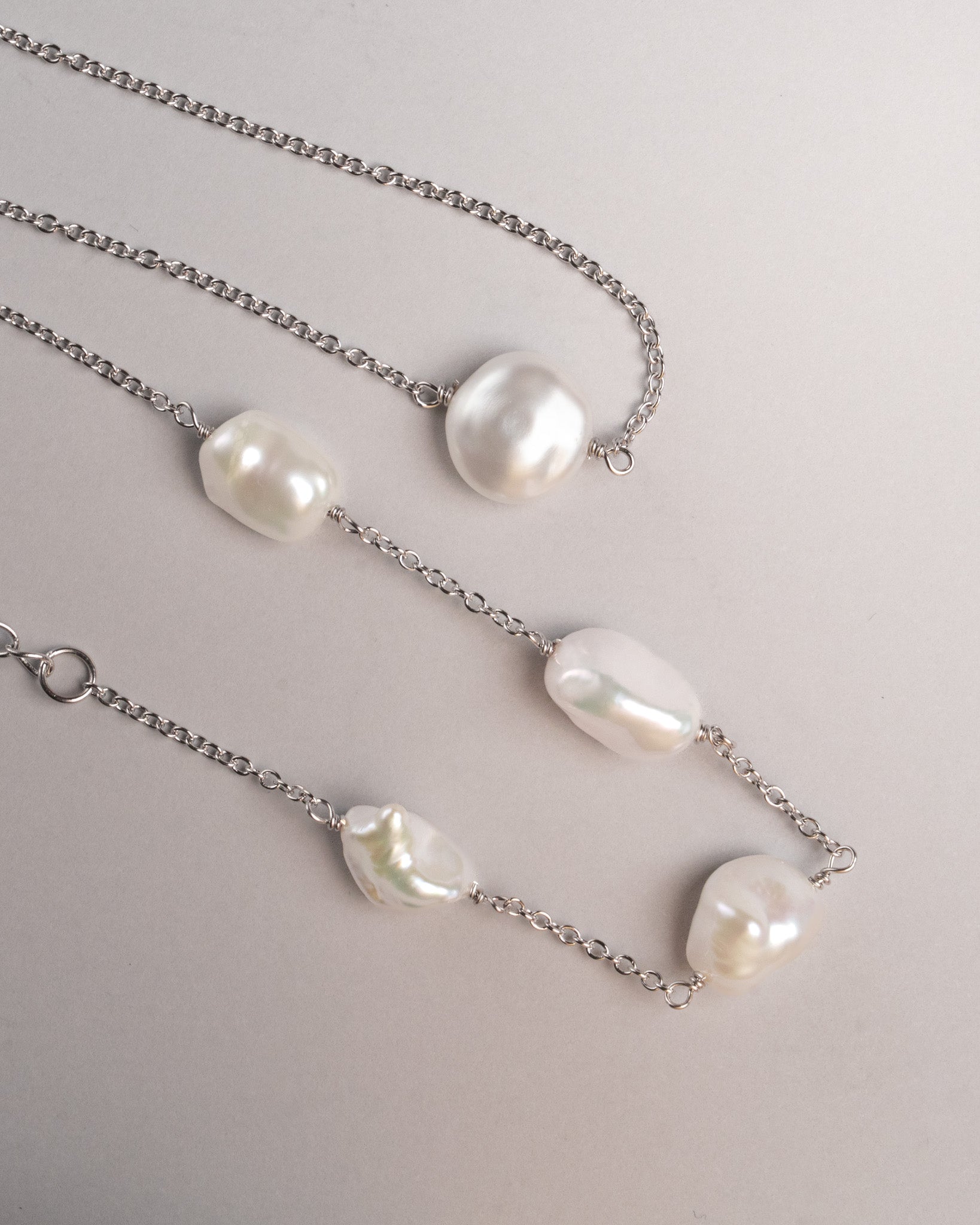
Cultured pearls grow inside a living organism, so nature rarely makes them perfectly round.

View cultured pearl earrings in all shapes
Color:
- Although it's not a technical "quality" factor (it's a matter of taste), the rarity of the color affects the price. For example, the natural deep golden tones of Australian pearls or the peacock tones of Tahitian pearls are highly sought-after.

View round pearl earrings in different colors
Mother-of-pearl quality (Thickness):
-
This is the invisible factor that determines how long your jewelry will last.
-
In nucleated pearls, which are all saltwater pearls, if the nacre is very thin, it will eventually wear away and reveal the nucleus, ruining the piece in a short time; this is common in pearls Akoya low quality.
-
En SY Pearls we select pearls with thick nacre or, in the case of Freshwater, pearls that are all mother-of-pearl, ensuring they last for generations.
-
- Paired (Matching) Uniformity when creating a set. Imagine the difficulty of finding two naturally formed pearls that are identical in size, luster, color, and shape to make a pair of earrings. Or finding 50 matching ones for a necklace. This expert hand-selection work is what sets High Jewelry apart from the rest.

White Round Cultured Pearl Necklaces
Now that you’re somewhat familiar with the 7 factors, you can better understand why a pair of earrings or a necklace with 6 mm pearls that barely shine, are not very round, and have visible imperfections over much of their surface are vastly cheaper than ones with 13 mm pearls whose 7 factors are optimal.
How much do pearls cost based on their origin?
Before we get into pricing, a golden rule: Origin doesn't determine quality, it determines rarity.
You can have a Freshwater pearl of extraordinary quality (mirror luster) that is more beautiful than a low-quality Australian pearl (matte). That’s why, at SY Perlas, we don’t compare apples to oranges.

Each origin has a unique personality:
-
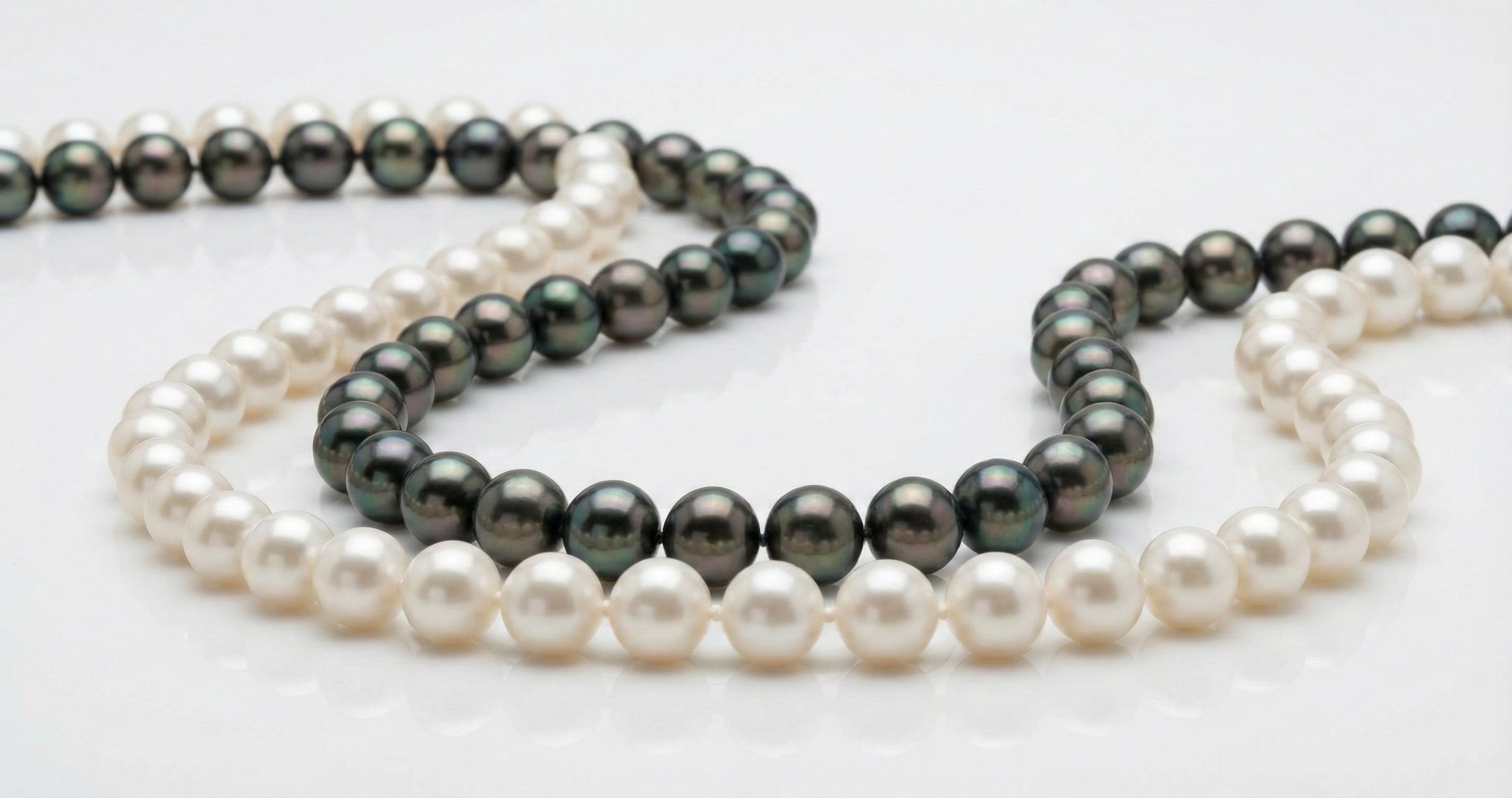
Looking for natural dark tones? Only Tahiti will give them to you.
-
Are you looking for gold tones? Only the Australian.
-
Looking for pastel tones (lavender/peach) and extreme durability? Freshwater is your ally.
Watch this video where we show the real in-hand differences:
The Treasure Map: The 4 Main Types As a general rule, assuming the quality is identical (High), this is the order of value in the market:
1. Freshwater: The Great Revolution
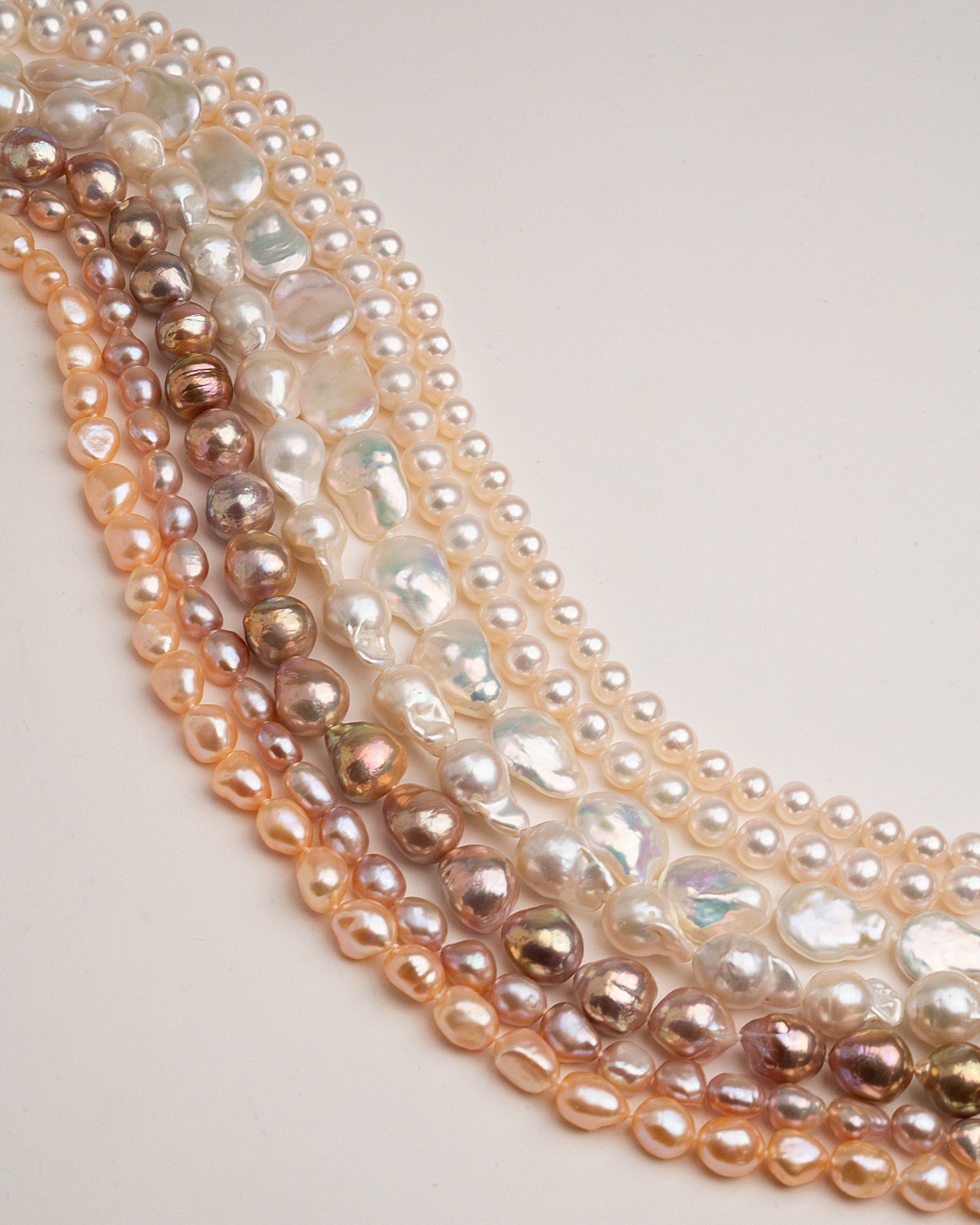
Historically the most accessible due to their abundance. Since they lack a core, they are almost 100% mother-of-pearl, which makes them incredibly durable.
-
Note: The market is saturated with dull "low-cost" versions. At SY Perlas, we steer clear of "costume jewelry" quality. We work only with the top grade of the harvest, ensuring that even if the price is more affordable, the pearl has real value and intense luster.
-
The test: Our quality Signature of Freshwater is virtually indistinguishable of the highest-quality saltwater pearls (Akoya or Australian) to the untrained eye.
-
The Secret: Nowadays there are varieties such as the Edison, giant, bead-nucleated Freshwater pearls that rival saltwater pearls in beauty for a fraction of the price.
2. Akoya (Japan): The Perfect Classic
The quintessential bridal pearl. They tend to be smaller (6mm - 8mm) but have a perfect luster and roundness that no other pearl can match. Its "mirror-like" luster in high-quality pearls is unmatched.
-
Note: There are many low-quality Akoya on the market with thin nacre and low luster. At SY Perlas, we focus on the high-luster Japanese selection, where the reflection is crisp and the shape is impeccable.
3. Tahiti (French Polynesia): The Exotic
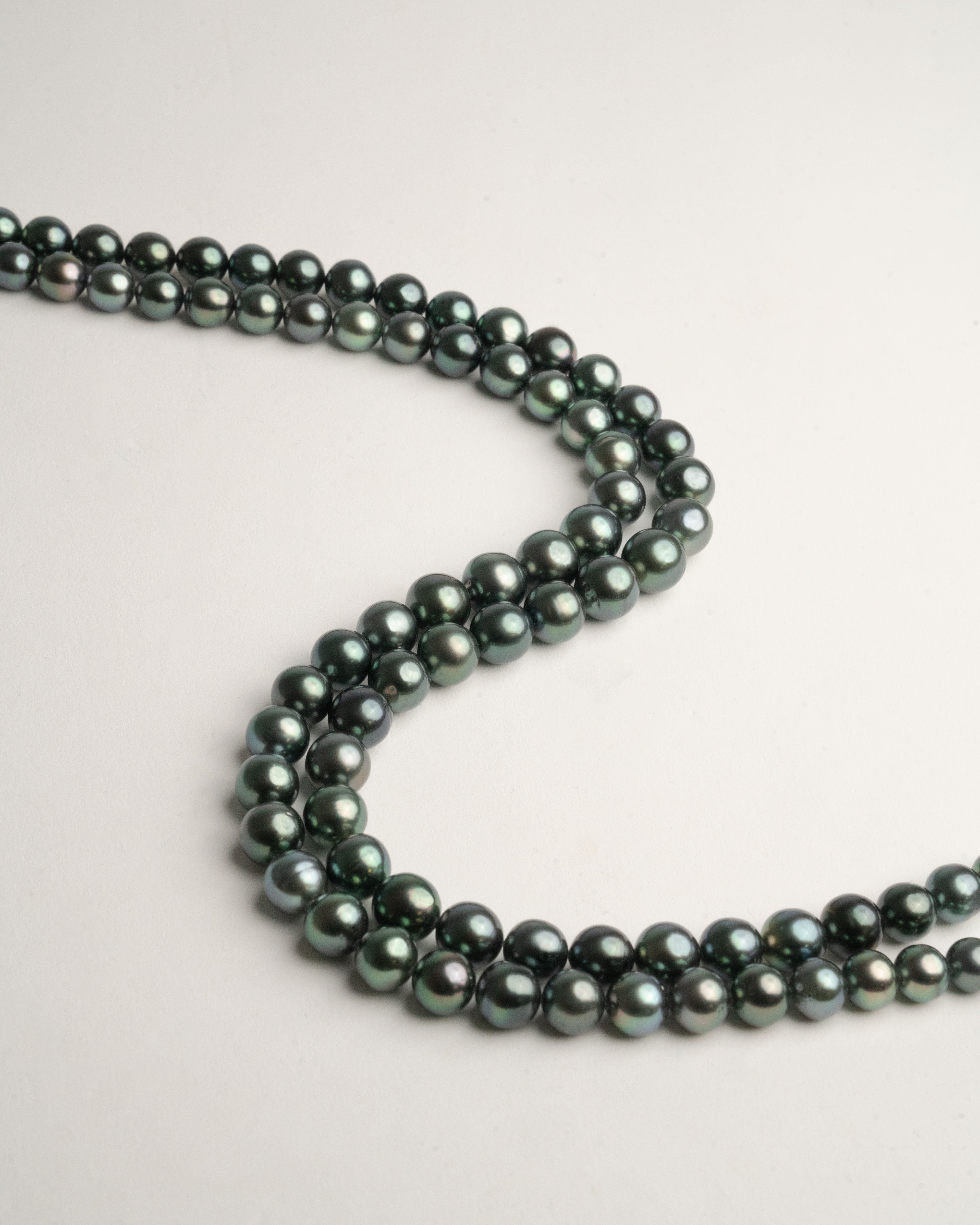
Famous for being the world’s only naturally dark pearls. Their shades range from silver-gray to green, brown, bluish, peacock, or eggplant. These are large pearls with plenty of personality.
-
Our selection: We avoid dull commercial grades. We look for those with vibrant color overtones that make them hypnotic.
4. Australian (South Sea): The Queen of Gems
The pinnacle of luxury. They are the largest, the rarest, and the most difficult to cultivate. Their nacre is thick and satiny, offering a "soft," elegant luster that stands out from meters away.
-
Investment: These are pieces for life, to be passed down from generation to generation.

View Australian Cultured Pearl Earrings
Our conclusion as experts: The real value beyond the price
If you've made it this far, congratulations: you already know more about pearls than 90% of jewelry sellers. Yes, I said sellers.
Now you understand that setting a fixed price in a table limits the reality of a dynamic market where quality is the only determining factor.
What we can state with absolute certainty is that Not all price tags show the same value.
In traditional jewelry, it's common for the final price to reflect the markups from a long chain of intermediaries, without necessarily resulting in a higher-quality pearl.
At SY Perlas, we operate under a model of excellence and direct service:
-
No middlemen: We import directly from the producing farms, ensuring that your investment goes toward the quality of the gem and not the distribution chain.
-
Gemological Rigor: As third-generation pearl dealers and graduates from the GIA (Gemological Institute of America), our selection process is strict. We do not sell standard lots; we filter and select only the pearls that meet our high standards for luster and surface.
-
Absolute transparency: We provide the information, education, and visual assurance you need to know exactly what you’re getting.
Therefore, our prices are the fair reflection of a premium quality and an expert selection.
The question isn't how much a pearl costs, but what quality and warranty you get in return for your investment.
Discover our collection and experience the difference: View Cultured Pearl Collection